Humans
Dr. Benjamin Schöne

VR & Real-World Cognition
Most psychology experiments assume the real world is noise. I study what happens when it is not. Using immersive virtual reality and EEG, I investigate what happens to cognition and emotion when environments become interactive, dynamic, and hard to ignore. The question is not whether VR looks real, but when it is real enough to change perception, affect, and decision-making.
SHERPA & Explainable AI
I use explainable AI to make models talk back.Through the SHERPA framework for EEG, opaque classifiers become analytical instruments that reveal when and where neural and computational systems actually contribute to behavior. Prediction is easy; explanation is the point.
Evil LLMs & Synthetic Minds
For teaching and research, I train large language models (LLMs) to behave badly on purpose. By creating deliberately misaligned and unethical LLMs, I show how seemingly intentional, moral, or social behavior can be engineered without understanding, values, or conscience. Machines might not have minds, but they are excellent mirrors for ours.

Dr. Benjamin Schöne
- Associate Professor of Psychology at the Norwegian University of Science and Technology (NTNU), Trondheim, Norway.
- PhD in Psychology from Osnabrück University, Germany
- Master and Bachelor in Cogntive Science from Osnabrück University, Germany.
- Research in cognitive neuroscience, virtual reality, EEG, and explainable artifical intelligence (XAI)
Mikkel Alcalá-Haug is a PhD researcher in the SynCoRe lab developing interpretable AI tools for complex human time-series data. His work focuses on building classification models paired with explainability methods (XAI) - not just to get predictions, but to show domain experts why the model made a decision and whether that reasoning holds up. He designs tools for researchers and practitioners who need to trust and act on AI outputs in consequential settings.
Beyond research, Mikkel lectures and co-develops master’s-level courses in AI and psychology, exploring topics like LLM fine-tuning, RAG systems, and how artificial and biological systems learn differently. Through supervising student projects and collaborating across technical and domain teams, he works to bridge perspectives between AI specialists and practitioners - helping translate between what’s technically possible and what’s actually useful
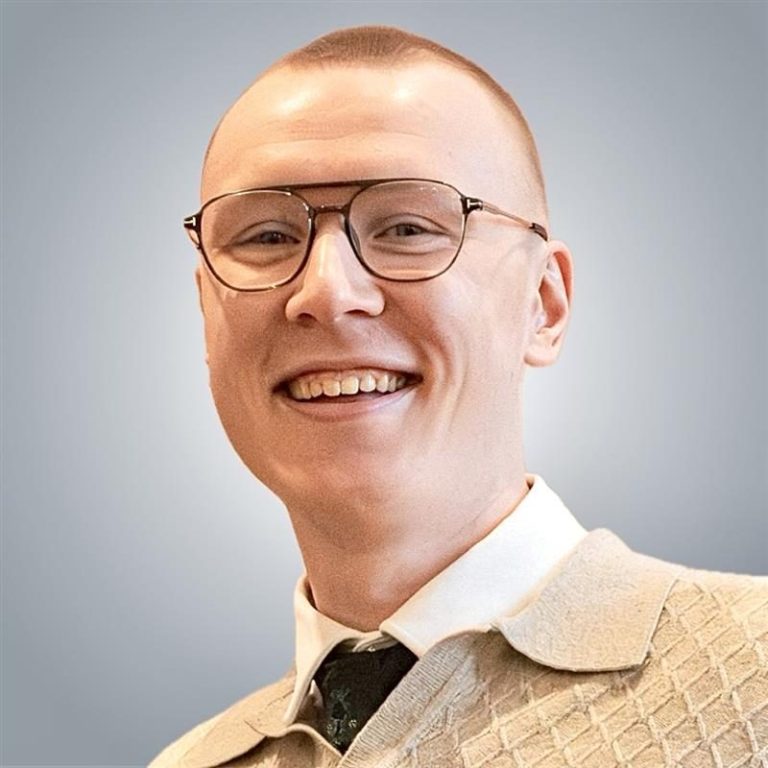
Mikkel Alcalá-Haug
Media presence and resources.
Selected media presence in German and further resources.
3SAT Scobel
scobel - Digitale Universen
Die analoge Welt bekommt Konkurrenz. In den Utopien von Tech-Giganten werden wir alle Teil neuer digitaler Universen – wie dem Metaverse von Mark Zuckerberg.
ZDF 37Grad: Warum glaubst du? Die Hoffnung,
"Warum glaubst du?" befasst sich mit den existenziellen Lebensfragen junger Menschen. Auf ihrer Entdeckungsreise interessiert Saadet, ob Religion heute noch etwas zu melden hat und warum junge Leute an ihrem Glauben festhalten und danach leben.
Resources
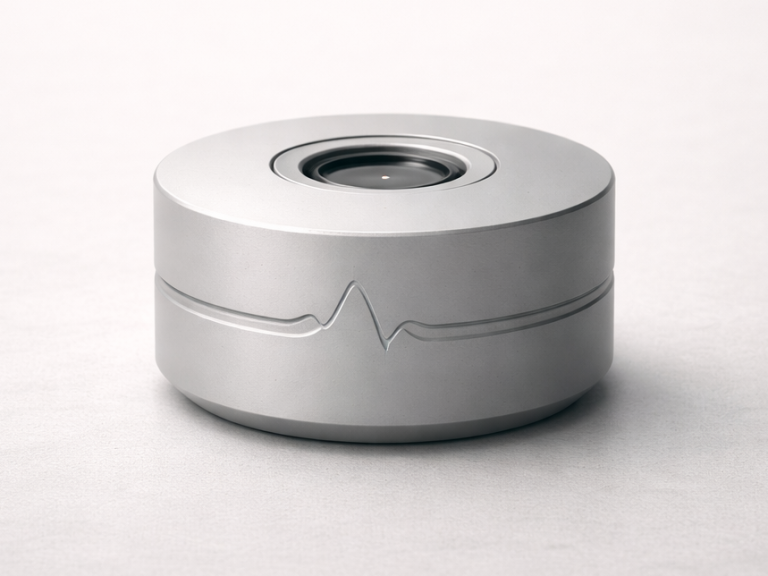
The SynCoRe GitHub includes SHERPA I & II as well as a start for evil LLMs and the code of a running MSc project on deep learning for gut EEG.
Social and Papers
Find all scientific publications on Google Scholar and ORCHID. Find me on ResearchGate or the NTNU's home page or LinkedIn.
The Guardian
The spikiness secret: can acupressure mats help with pain, stress and insomnia?
The article explores research on acupressure mats and wellbeing, and I was glad to conduct the study with this team, formalizing a student project into a peer-reviewed empirical study.